

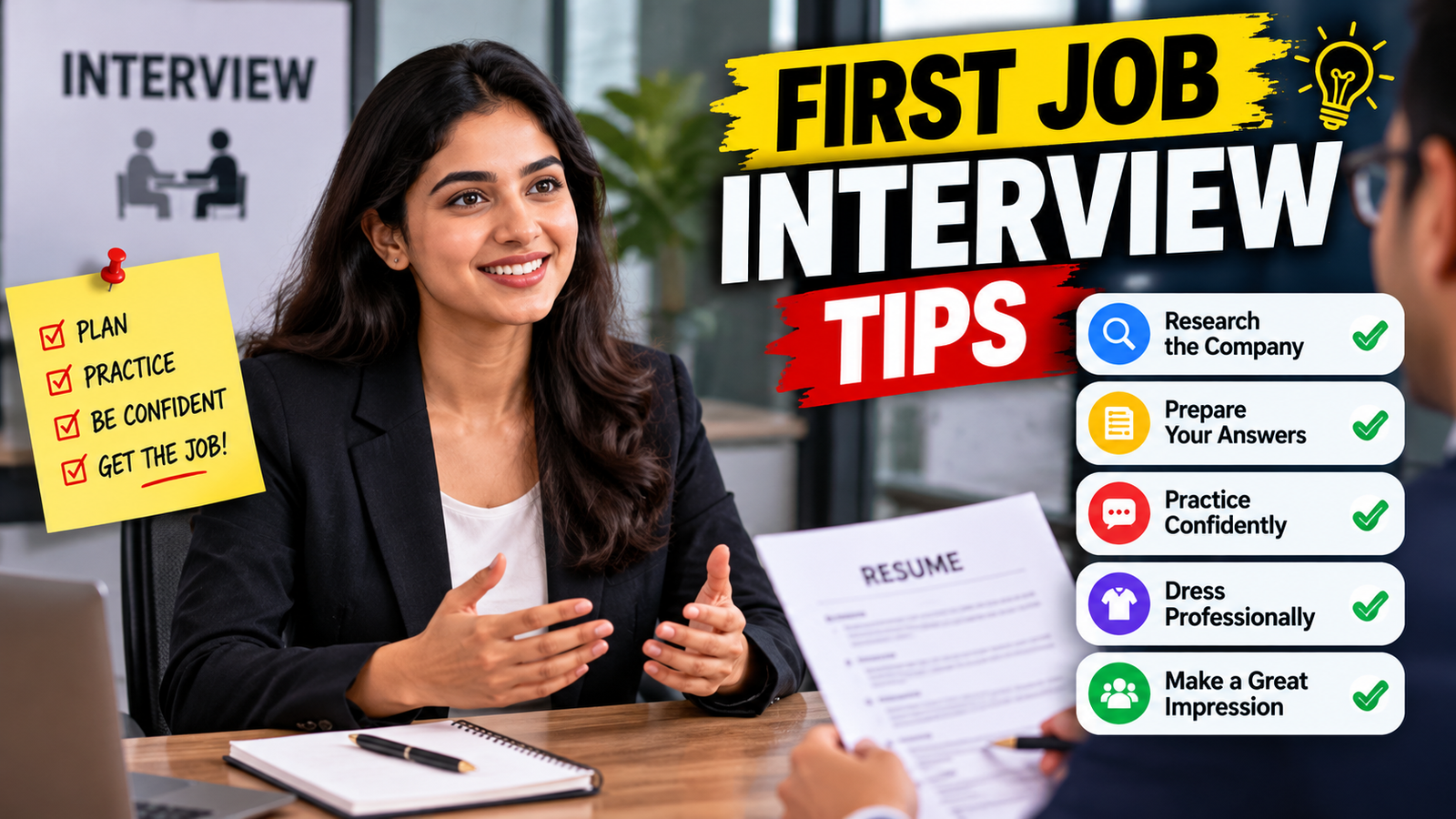
Getting invited to your first job interview is an exciting milestone. It means an employer has noticed something promising in your application and wants to learn more about you. However, if you have never attended an interview before, you may be unsure about what to say, how to behave, or how to demonstrate your abilities.
The good news is that you do not need years of professional experience to make a positive impression. Employers hiring beginners often want to understand your attitude, communication skills, willingness to learn, and ability to handle responsibilities.
Preparing in advance can help you feel more comfortable and explain your strengths clearly. From researching a company to practicing common questions, a few practical steps can make the entire experience easier.
Here are seven useful first job interview tips to help students, fresh graduates, and other entry-level candidates prepare with confidence.
1. Research the Company Before Your Interview
One of the simplest ways to prepare is to understand the organization you are applying to. Employers appreciate candidates who have taken the time to learn about the business rather than applying without knowing what it does.
Start by visiting the company’s official website. Read its About Us page, explore its products or services, and understand the customers it serves. If the organization publishes company news or updates, review a few recent announcements.
Next, return to the job advertisement and identify the main responsibilities of the position. For example, a customer support role may require patience, clear communication, and the ability to solve customer problems. An entry-level technical role may place more emphasis on computer skills, logical thinking, and learning new tools.
Prepare a short explanation of why the company and position interest you. Your answer should connect something about the organization with your own career goals.
Avoid memorizing every detail about the business. Focus on a few relevant facts that you can discuss naturally.
Practical tip: Before the interview, make a note of three things you learned about the employer and one reason you would like to work there.
2. Understand the Job Description and Identify Your Strengths
A job description is more than a list of duties. It provides clues about the qualities and abilities the employer wants in a candidate.
Read it carefully and identify repeated skills, responsibilities, and tools. If the advertisement frequently mentions teamwork, communication, or Excel, these may be important areas to prepare for.
Separate essential requirements from additional preferences. You may not satisfy every item, especially if you are applying for your first job. That does not automatically mean you are unsuitable.
Instead, identify examples from your own life that demonstrate relevant abilities.
For instance, a college presentation can demonstrate communication skills. Organizing a student event can show planning and teamwork. Helping with a family business may demonstrate customer service, responsibility, and problem-solving.
If the role requires a tool you have never used, research its basic purpose. Be honest about your current experience rather than pretending to be an expert.
Create a short list of your strongest skills and the examples that support them. This will help you answer questions with specific evidence instead of making general claims.
3. Prepare for Common Interview Questions
Many first interviews include questions about your background, motivation, strengths, and suitability for the position. Practicing these topics in advance can help you organize your thoughts.
Tell Me About Yourself
Treat this as a short professional introduction rather than an opportunity to explain your entire life story.
Start with your education or recent activities, mention one or two relevant skills, and finish by explaining why the position interests you.
For example, a recent graduate might describe their degree, a project that developed their analytical skills, and their interest in applying those skills in a professional environment.
Aim for approximately one minute. Practice until the introduction sounds natural instead of memorized.
What Are Your Strengths?
Choose two or three strengths that relate to the job. Support each one with a real example.
Rather than simply saying you are organized, explain how you planned a college assignment, coordinated responsibilities, and helped your team meet a deadline.
Specific examples make your answer more believable and help the interviewer understand how you might perform at work.
What Is Your Weakness?
Choose a genuine area for improvement that you are actively addressing. Explain what you have learned and the steps you are taking to improve.
For example, if you sometimes struggle to speak confidently in groups, you could describe how you practice presentations and participate more often in discussions.
Avoid claiming that you have no weaknesses. Employers generally understand that beginners are still developing their skills.
Why Should We Hire You?
Connect your abilities with the employer’s requirements. Explain what you can contribute, how you approach learning, and why you are interested in the role.
If you lack formal work experience, mention relevant coursework, personal projects, internships, volunteering, or part-time responsibilities.
Your goal is not to suggest that you know everything. It is to show that you understand the position and are prepared to learn and contribute.
4. Use Real Examples to Answer Behavioural Questions
Interviewers may ask you to describe a situation in which you solved a problem, worked with others, or handled a difficult responsibility.
The STAR method is a useful framework for organizing these answers.
Situation: Explain the background briefly.
Task: Describe the responsibility or challenge you faced.
Action: Explain the specific steps you took.
Result: Share the outcome and, where appropriate, what you learned.
Imagine an interviewer asks how you handled a disagreement during a group project. You could explain the problem, describe your responsibility, discuss how you listened to the other students and helped divide the work, and finish with the project’s outcome.
You do not need a long employment history to answer these questions. College assignments, sports activities, volunteering, community projects, and personal responsibilities can provide relevant examples.
Choose stories that genuinely happened. Do not invent achievements or exaggerate your contribution. Employers may ask follow-up questions, so it is important to understand the details of your own example.
5. Prepare Questions to Ask the Interviewer
Near the end of an interview, you may be asked whether you have any questions. Preparing a few thoughtful questions shows that you are interested in understanding the position.
Consider asking:
- What would a typical working day look like in this role?
- Which skills are most important for someone starting in this position?
- What training is available for new employees?
- How will performance be evaluated during the first few months?
- What are the next steps in the recruitment process?
Choose questions that have not already been answered during the conversation.
You can also ask about working hours, compensation, or benefits when appropriate. These are legitimate employment considerations, and you should understand the conditions before accepting an offer.
Remember that an interview is also an opportunity for you to evaluate the employer. You want to determine whether the role, responsibilities, and working environment match your expectations.
6. Get Ready for the Interview Day
Good preparation includes practical details as well as answers to questions.
Choose clean, comfortable clothing that suits the organization and position. You do not need expensive formal wear to look professional. The goal is to appear neat and prepared.
For an in-person interview, confirm the address, travel time, interviewer’s name, and appointment time. Plan to arrive around 10 to 15 minutes early, allowing extra time for unexpected delays.
Carry copies of your resume, relevant documents, a pen, and a small notebook if appropriate. Review the employer’s instructions about identification or certificates.
For an online interview, test your camera, microphone, internet connection, and meeting link beforehand. Choose a quiet location with adequate lighting and a tidy background. Close unnecessary applications and silence notifications.
During the interview, listen carefully, speak clearly, and take a brief pause if you need to organize your thoughts. If you do not understand a question, politely ask the interviewer to clarify it.
You do not need to answer every question instantly. A thoughtful response is often better than a rushed one.
7. Practice and Follow Up Professionally
Reading sample answers silently is not the same as speaking during an interview. Practicing aloud helps you notice unclear explanations, unnecessary details, and phrases you use repeatedly.
Try recording yourself answering common questions. Listen to the recording and check whether your responses are clear, relevant, and reasonably concise.
You can also ask a friend, teacher, or mentor to conduct a mock interview. Request honest feedback about your communication, confidence, and examples.
Avoid memorizing complete answers word for word. Instead, remember the main points you want to communicate so you can respond naturally to different questions.
After the interview, consider sending a short thank-you email within 24 hours. Thank the interviewer for their time, mention something relevant from your conversation, and briefly restate your interest in the position.
If the employer provided a timeline for its decision, respect it. If that period passes without an update, one polite follow-up message is reasonable.
A follow-up cannot guarantee a job offer, but it can demonstrate professional communication.
Final Thoughts
Your first job interview may feel unfamiliar, but preparation can make it more manageable. Research the employer, understand the role, practice common questions, and prepare genuine examples that demonstrate your skills.
Pay attention to practical details, communicate honestly, and remember that employers hiring beginners do not expect you to know everything. They want to understand your potential, attitude, and readiness to learn.
Not every interview results in an offer, and that is normal. Different employers look for different combinations of skills and experience. Treat each interview as an opportunity to learn, improve, and become more confident.
With preparation and practice, you can approach your first job interview with a clearer plan and a better understanding of what you can offer.
1 thought on “First Job Interview Tips: How to Prepare and Make a Great Impression”
Comments are closed.