

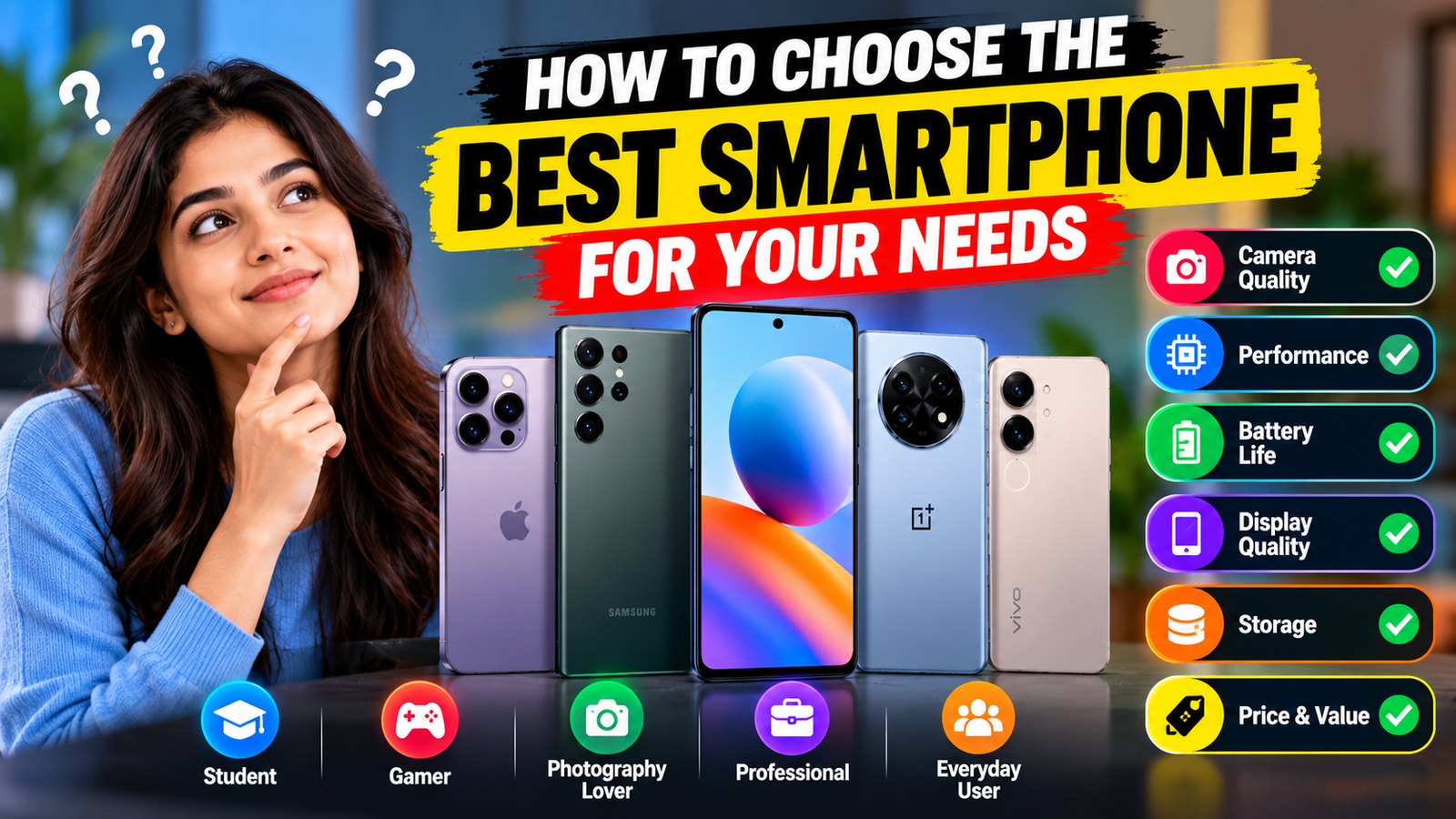
Buying a new smartphone can be confusing. With so many models, features, specifications, and price ranges available, choosing the right device is not always easy. Some phones focus on camera quality, while others offer powerful processors, long battery life, gaming performance, or premium designs.
However, the most expensive smartphone is not necessarily the best choice for everyone. A student who mainly uses messaging apps and attends online classes may have very different requirements from a mobile gamer, content creator, or business professional.
The key is to understand your daily needs before comparing devices. Instead of focusing only on brand names or advertising, consider how you use your phone, how much you can spend, and which features matter most to you.
This smartphone buying guide explains the important factors to consider so you can make a more informed purchasing decision.
1. Set Your Budget Before Comparing Smartphones
Your budget is one of the first things to decide when shopping for a new smartphone. Knowing your spending limit helps you narrow your options and avoid paying for features you may never use.
Start by deciding the maximum amount you are comfortable spending. Then compare phones within that range instead of automatically choosing the most expensive model.
Consider the total cost of ownership, not just the advertised price. A protective case, screen protector, charger, or additional storage may increase your final spending if these accessories are not included.
You should also check the warranty, service availability, and potential repair costs. A phone that appears affordable initially may become more expensive if replacement parts are difficult to obtain.
Think about your priorities as well. If photography is important, spending more on a better camera system may make sense. If you mainly browse websites, use messaging applications, and watch videos, a well-balanced mid-range phone may provide everything you need.
Buying tip: Make a list of three essential features and two optional features before comparing prices. This will help you focus on value rather than marketing claims.
2. Choose a Smartphone That Matches Your Daily Usage
Before checking technical specifications, identify what you do most often on your phone.
For students: Look for reliable battery life, sufficient storage, a comfortable display, and dependable performance for educational apps, video calls, browsing, and note-taking.
For mobile gamers: Prioritize sustained performance, effective heat management, a responsive display, and a battery that can handle longer gaming sessions. A high refresh rate can make supported games look smoother, but it does not guarantee better gaming performance by itself.
For photography enthusiasts: Compare camera quality in daylight and low light, image stabilization, autofocus, video recording, and the usefulness of the secondary cameras.
For content creators: Consider video quality, microphone performance, storage capacity, editing performance, and how easily you can transfer large files.
For business users: Look for dependable security updates, strong battery life, reliable connectivity, productivity features, and compatibility with your work applications.
For everyday users: A balanced phone with a good display, reliable battery, smooth performance, and long-term software support may be more useful than a device with extreme specifications.
Understanding your usage makes it easier to identify which specifications deserve your attention.
3. Check the Processor and Overall Performance
The processor, often called the chipset, plays an important role in how a smartphone performs. It affects application loading, multitasking, gaming, image processing, and power efficiency.
However, processor performance should not be judged by a model name or a single benchmark score alone.
Consider how quickly the phone opens applications, switches between tasks, handles demanding games, and performs everyday activities. Reviews that test real-world performance can help you understand these differences.
RAM also affects multitasking. More RAM can help a device keep applications available in the background, but the amount you need depends on the operating system and your usage. A phone with well-optimized software can sometimes perform better than its specifications suggest.
Storage is equally important. Applications, photographs, videos, and downloads gradually occupy space. If you record many videos or install large games, choose enough internal storage for your needs.
Check whether the phone supports expandable storage if you want to use a memory card. Many modern devices do not offer this option.
Buying tip: Do not choose a phone based only on the highest RAM number. Consider the processor, storage type, software optimization, and your actual workload together.
4. Compare Display Quality and Screen Size
The display is one of the features you interact with most frequently, so it deserves careful attention.
Smartphones commonly use LCD or OLED display technologies. OLED screens can produce deep blacks and strong contrast, while the quality of an LCD screen depends on its design and implementation. Neither technology alone guarantees that one phone will have the better display.
Look at brightness, color reproduction, viewing angles, resolution, and outdoor visibility. If you frequently use your phone in sunlight, brightness and readability can be particularly important.
Screen size also affects comfort. A larger display is useful for watching videos, gaming, reading documents, and multitasking. However, it may be harder to operate with one hand or fit comfortably into a small pocket.
A high refresh rate, such as 90Hz or 120Hz, can make scrolling and supported animations appear smoother. Nevertheless, its benefits depend on the device, applications, and content being used.
If possible, examine the phone in person. Try holding it, reading small text, and navigating the interface before making your decision.
5. Evaluate Camera Quality Beyond Megapixels
Camera specifications can be misleading when comparing smartphones. A higher megapixel count does not automatically mean better photographs.
Image quality depends on several factors, including sensor size, lens quality, image processing, autofocus, stabilization, and lighting conditions.
If you regularly take photographs, look for independent camera samples that show how the phone performs in daylight, indoors, and at night.
Also consider video recording. Check the available resolutions and frame rates, stabilization performance, microphone quality, and whether the phone can maintain good exposure while recording.
Secondary cameras can provide additional flexibility. An ultrawide camera is useful for landscapes and group photographs, while a telephoto camera can help capture distant subjects. However, some phones use secondary sensors that provide limited practical benefits.
For social media creators, the front camera, portrait mode, video quality, and compatibility with frequently used applications may be especially important.
Buying tip: Compare real photographs and videos taken with the devices you are considering rather than relying exclusively on megapixel numbers.
6. Look for Reliable Battery Life and Charging
Battery capacity is usually measured in milliampere-hours (mAh), but a larger number does not automatically guarantee longer battery life.
Actual endurance depends on the processor, display, network conditions, software, screen brightness, and how intensively you use the phone.
If you spend long hours away from a charger, look for devices with strong real-world battery test results. Consider whether your typical day involves video streaming, navigation, mobile data, photography, or gaming.
Charging speed can also make a difference. Some smartphones support fast wired charging, while others include wireless charging. Availability varies by model and price range.
Before buying, check the supported charging speed and whether a compatible charger is included. A phone may advertise fast charging but require a separately purchased adapter to reach its maximum supported speed.
Battery longevity matters too. Read the manufacturer’s warranty information and check whether battery replacement services are available in your area.
7. Check Software Updates and Security
A smartphone is a long-term purchase, so software support deserves as much attention as hardware.
Operating system updates can introduce new features, improve compatibility, and address software problems. Security updates help protect the device against known vulnerabilities.
Before purchasing, check the manufacturer’s official update policy for the exact model. Look for the promised duration of operating system upgrades and security updates, including when that support period begins.
Also consider the software experience. Some Android phones provide extensive customization options, while others focus on a simpler interface. Review the pre-installed applications, available privacy controls, and whether the manufacturer allows you to remove unwanted applications.
If you plan to keep your phone for several years, reliable software support can make a significant difference.
8. Consider Storage, Connectivity, and Build Quality
Internal storage affects how much content you can keep on your device. A phone with limited storage may become inconvenient if you regularly install large games, download movies, or record high-resolution videos.
Choose a capacity that matches your habits and check whether cloud storage or expandable storage can meet your needs.
Connectivity is another important consideration. Depending on your location and requirements, you may want 5G support, reliable Wi-Fi, Bluetooth, NFC, and dual-SIM functionality.
Remember that having 5G hardware does not guarantee high speeds everywhere. Actual performance depends on network coverage, carrier support, and local conditions.
Build quality also matters. Check the frame, back material, button placement, and overall comfort. If water or dust resistance is important, verify the device’s official protection rating rather than assuming that every premium-looking phone has the same protection.
Finally, check the availability of authorized service centers and replacement parts before making a purchase.
9. Read Reviews and Compare Before Buying
Once you have shortlisted two or three phones, compare them using the same criteria.
Read independent reviews that test performance, camera quality, battery endurance, display brightness, and software. Pay attention to limitations as well as strengths.
Recent user reviews may reveal recurring issues, but individual complaints do not always represent every device. Look for consistent patterns and consider the reviewer’s usage conditions.
Compare the final prices across reputable sellers, including any applicable delivery costs, offers, and warranty conditions. Be cautious of prices that appear unusually low and verify the seller before paying.
Avoid choosing a device simply because it is popular or recommended by an influencer. The right phone is the one that meets your requirements at a price you can comfortably afford.
Frequently Asked Questions
How much RAM do I need in a smartphone?
Your needs depend on your applications and multitasking habits. Everyday users may need less memory than people who regularly play demanding games or use intensive applications. Consider real-world performance rather than RAM alone.
Is a higher megapixel camera always better?
No. Sensor quality, lens design, stabilization, autofocus, and image processing all affect the final result.
Is a 120Hz display worth buying?
It can provide smoother scrolling and supported animations. Whether it is worth paying extra depends on your preferences, budget, and the rest of the phone’s features.
Should I buy a flagship or a mid-range smartphone?
Choose a flagship if you genuinely need its advanced camera system, performance, display, or premium features. A good mid-range phone may offer better value if your everyday needs are more modest.
How important are software updates?
They help maintain security, compatibility, and access to supported features. Check the official update policy before buying a phone you intend to keep for several years.
Final Thoughts
Choosing the best smartphone does not mean buying the most expensive model or chasing the highest specifications. It means finding a device that fits your budget, daily habits, and long-term expectations.
Start by identifying your main priorities. Then compare performance, display quality, cameras, battery life, software support, storage, and connectivity. Read independent reviews, check warranty conditions, and verify the final price before placing an order.
A little research can help you avoid paying for features you rarely use and focus on the ones that genuinely improve your experience.
The best smartphone for you is the one that meets your needs reliably, offers good value for money, and remains useful for years to come.
Read More : How to Protect Yourself from AI-Powered Online Scams in 2026
1 thought on “How to Choose the Best Smartphone for Your Needs: A Complete Guide”
Comments are closed.