

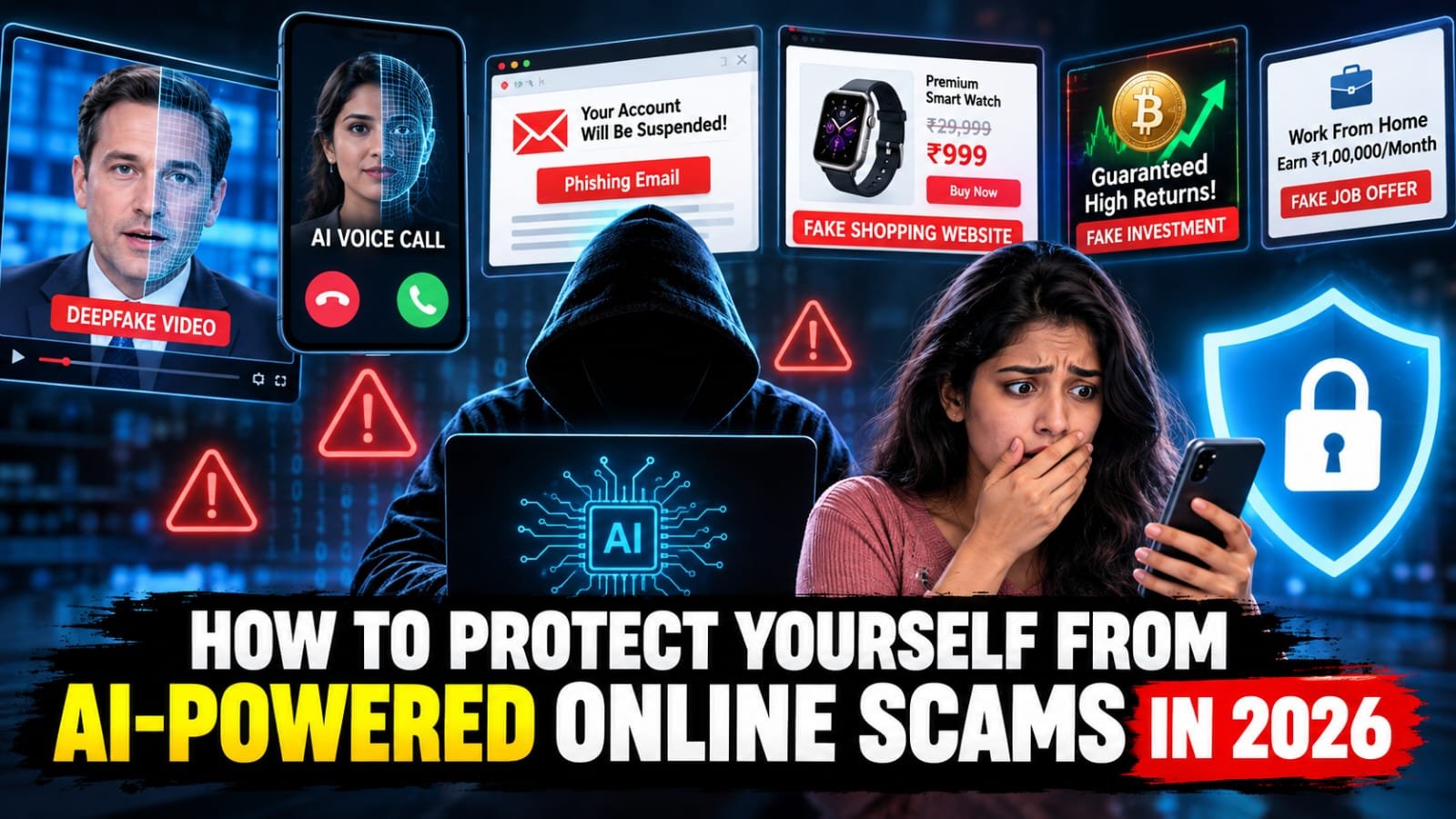
Artificial intelligence (AI) is making everyday digital activities faster and easier, but criminals can also misuse this technology to deceive people online. From realistic phishing emails to cloned voices and deepfake videos, AI-powered scams can make fraudulent messages appear more trustworthy than ever.
The FBI warned in a December 3, 2024, public service announcement that criminals were using generative AI to support financial fraud, impersonation, and other deceptive schemes. AI can help scammers create convincing text, images, audio, and videos with fewer obvious mistakes.
For internet users in 2026, recognizing these threats is an important part of staying safe online. Understanding how scams work, verifying suspicious requests, and protecting sensitive information can help reduce the risk of financial loss and identity theft.
This guide explains common AI-powered online scams, warning signs to watch for, and practical steps you can take to protect yourself.
What Are AI-Powered Online Scams?
AI-powered online scams are fraudulent activities in which criminals use artificial intelligence to create deceptive messages, images, voices, videos, or websites.
Their goal may be to steal money, obtain passwords, collect personal information, gain access to accounts, or persuade victims to install harmful software.
For example, a scammer might send an email that appears to come from your bank. The message may use professional language, familiar branding, and an urgent warning about suspicious account activity. A link then directs you to a fraudulent website designed to collect your login credentials.
AI does not automatically make content fraudulent. Businesses and individuals use AI for legitimate purposes. The danger arises when criminals use it to impersonate trusted people or organizations.
Common Types of AI-Powered Online Scams
1. AI-Generated Phishing Emails and Messages
Phishing involves deceptive emails, text messages, or social media messages designed to steal information or encourage people to click malicious links.
AI can help scammers write convincing messages, translate them into different languages, and imitate professional communication.
For instance, you might receive a message claiming that an online order has been cancelled. It asks you to confirm your payment details through an unfamiliar link.
To stay safe, check the sender’s complete email address, avoid unexpected links, and visit the company’s official website independently. Never enter banking information or passwords on an unverified page.
Correct spelling and professional language do not prove that a message is genuine.
2. AI Voice-Cloning Scams
Voice-cloning technology can generate audio that resembles a real person’s voice. Criminals may use it to impersonate relatives, friends, or business executives.
Imagine receiving a call from someone who sounds like a family member asking for emergency money. The caller claims to be in trouble and insists that you transfer funds immediately.
Before responding, pause and verify the situation. Call the person using a number you previously saved, or contact another trusted family member. Families can also establish a private codeword for emergencies.
Never transfer money solely because a caller sounds familiar, especially when the request involves secrecy or unusual payment instructions.
3. Deepfake Video Scams
Deepfakes are synthetic or manipulated media that can make people appear to say or do things that never happened.
Scammers may use deepfake videos to impersonate public figures, company executives, or other trusted individuals. A fraudulent video meeting might feature someone who appears to be a manager requesting an urgent payment.
Always verify unusual financial requests through a separate, trusted communication channel. Follow established approval procedures before transferring company funds or changing payment details.
Do not rely exclusively on someone’s appearance or voice during a video call. Convincing deepfakes may not contain obvious visual or audio defects.
4. Fake Shopping Websites
Criminals can use AI to generate product descriptions, promotional images, customer testimonials, and professional-looking online stores.
A fraudulent website might advertise an expensive smartphone at an unusually low price to attract buyers. After receiving payment, the seller may disappear or deliver an unrelated product.
Before buying, research the seller, check the website address, look for independent reviews, and read the refund and return policies. Use payment methods that provide appropriate buyer protection.
Remember that HTTPS indicates an encrypted connection; it does not guarantee that a website or seller is legitimate.
5. Fake Investment and Job Offers
Fraudulent investment promotions may use AI-generated celebrity videos, fabricated testimonials, or fake expert profiles to appear credible. They may promise guaranteed profits or pressure you to invest immediately.
Similarly, fake recruiters may offer attractive remote jobs and then demand registration fees, training payments, or money for equipment.
Verify investment providers through the relevant financial regulator and check job vacancies on the employer’s official careers website. Be suspicious of guaranteed returns, requests for upfront job payments, and offers that seem too good to be true.
Never send money to an unverified person simply because their profile, voice, or promotional video appears genuine.
Warning Signs of an AI Scam
AI-generated scams can be difficult to recognize, so consider the full context of a message rather than relying on a single clue.
Watch for these common warning signs:
- Unexpected urgency: You are told to act immediately or risk losing money, access, or an important opportunity.
- Requests for confidential information: Someone asks for passwords, banking details, identity documents, or one-time verification codes.
- Unusual payment instructions: You are asked to transfer money to a new account, use cryptocurrency, or bypass normal procedures.
- Suspicious links: A website address contains spelling variations or does not match the organization’s official domain.
- Unexpected changes in communication: A familiar person contacts you from a new number and makes an unusual request.
- Pressure to keep secrets: The sender discourages you from contacting family members, colleagues, or your bank.
These signs do not automatically prove fraud. They are reasons to stop, investigate, and verify the request independently.
How to Protect Yourself from AI-Powered Online Scams
1. Verify Identities Independently
If a message appears to come from your bank, employer, relative, or another trusted organization, contact them using previously verified information.
Do not rely on phone numbers, links, or payment details supplied in a suspicious message. For financial transactions, independently confirm the recipient and account details before approving payment.
2. Enable Multi-Factor Authentication
Multi-factor authentication (MFA) adds another verification step when you sign in to an account.
Where available, consider using passkeys, security keys, or authenticator applications. Use unique passwords for important accounts and consider a reputable password manager.
Never share one-time passwords or account recovery codes with callers or message senders. MFA can reduce account-takeover risks, although it cannot prevent every type of scam.
3. Limit Personal Information Shared Online
Publicly available information can help criminals make impersonation attempts more believable.
Review the personal details you share online, including birthdays, family relationships, travel plans, workplace information, and personal recordings.
You do not need to remove all your online content. Focus on limiting information that could help someone impersonate you or manipulate people who know you.
4. Keep Devices and Applications Updated
Install security updates for your operating system, browser, and applications. Download software from official app stores or verified developer websites.
Avoid unexpected attachments and unfamiliar downloads. Use reputable security software where appropriate, and keep backups of important files.
5. Pause Before Making Important Decisions
Scammers often use fear, excitement, or emotional pressure to influence their targets.
Before sending money or sharing information, ask yourself whether you expected the message, whether the request is unusual, and whether you can verify the sender through an independent channel.
If you cannot confirm the request, do not proceed until you can.
6. Establish a Family Verification Phrase
A private family codeword can provide an additional way to check unexpected emergency requests.
Keep the phrase confidential and do not publish it on social media. If someone claiming to be a relative asks for emergency money, independently contact that person or another trusted family member before acting.
A codeword is an extra safeguard, not a replacement for independent verification.
What to Do If You Become a Victim
If you clicked a suspicious link, disclosed personal information, or sent money, take action as soon as possible.
Contact your bank or payment provider. If money was transferred or payment details were exposed, ask whether the transaction can be stopped, recalled, or disputed. Recovery is not guaranteed, but prompt reporting may help.
Secure your accounts. Change compromised passwords from a trusted device, review active sessions, remove unfamiliar recovery details, and enable MFA. If you reused the exposed password, change it on other affected accounts.
Secure your device. If you installed suspicious software or granted remote access, seek trusted technical assistance. Change important passwords from a separate, trusted device when necessary.
Preserve evidence. Save relevant messages, screenshots, email details, transaction receipts, phone numbers, and website addresses.
Report the incident. In India, use the official [National Cyber Crime Reporting Portal](https://cybercrime.gov.in/). If financial cyber fraud has occurred, contact your bank immediately and call India’s cybercrime helpline at 1930 as soon as possible. In the United States, you can report relevant incidents to the [FBI’s Internet Crime Complaint Center](https://www.ic3.gov/) or the [Federal Trade Commission](https://reportfraud.ftc.gov/).
Be cautious of anyone promising to recover lost money in exchange for an advance fee.
Frequently Asked Questions
What is an AI-powered online scam?
It is a scam in which criminals use AI-generated or AI-assisted content to deceive people and attempt to steal money, personal information, or account access.
Can AI imitate someone’s voice?
Yes. Voice-cloning technology can produce audio resembling a person’s voice. Always verify unexpected requests for money through a previously trusted contact method.
How can I recognize an AI-generated scam email?
Look for suspicious links, unusual requests, urgency, unexpected attachments, and mismatched sender addresses. Correct grammar does not guarantee that an email is legitimate.
Can a VPN protect me from AI scams?
A VPN can help protect some network traffic and privacy, depending on its configuration. However, it does not automatically prevent phishing, impersonation, or fraudulent payments.
Are AI-generated videos always fake?
No. Many videos are genuine, and AI also has legitimate uses. When a video contains an important claim or financial request, verify it through reliable independent sources.
Conclusion
AI-powered online scams can be convincing because criminals can imitate trusted people, create professional-looking messages, and produce realistic voices or videos. However, simple security habits can help reduce the risks.
Verify identities independently, protect your passwords, enable multi-factor authentication, keep your devices updated, and report suspicious activity promptly.
The most important rule is simple: Never treat a familiar voice, realistic video, or professional-looking email as the only proof that a request is genuine.
Verify first, then act. Staying alert and following reliable cybersecurity guidance can help you protect your money, personal information, and online accounts in 2026.
1 thought on “How to Protect Yourself from AI-Powered Online Scams in 2026”
Comments are closed.