

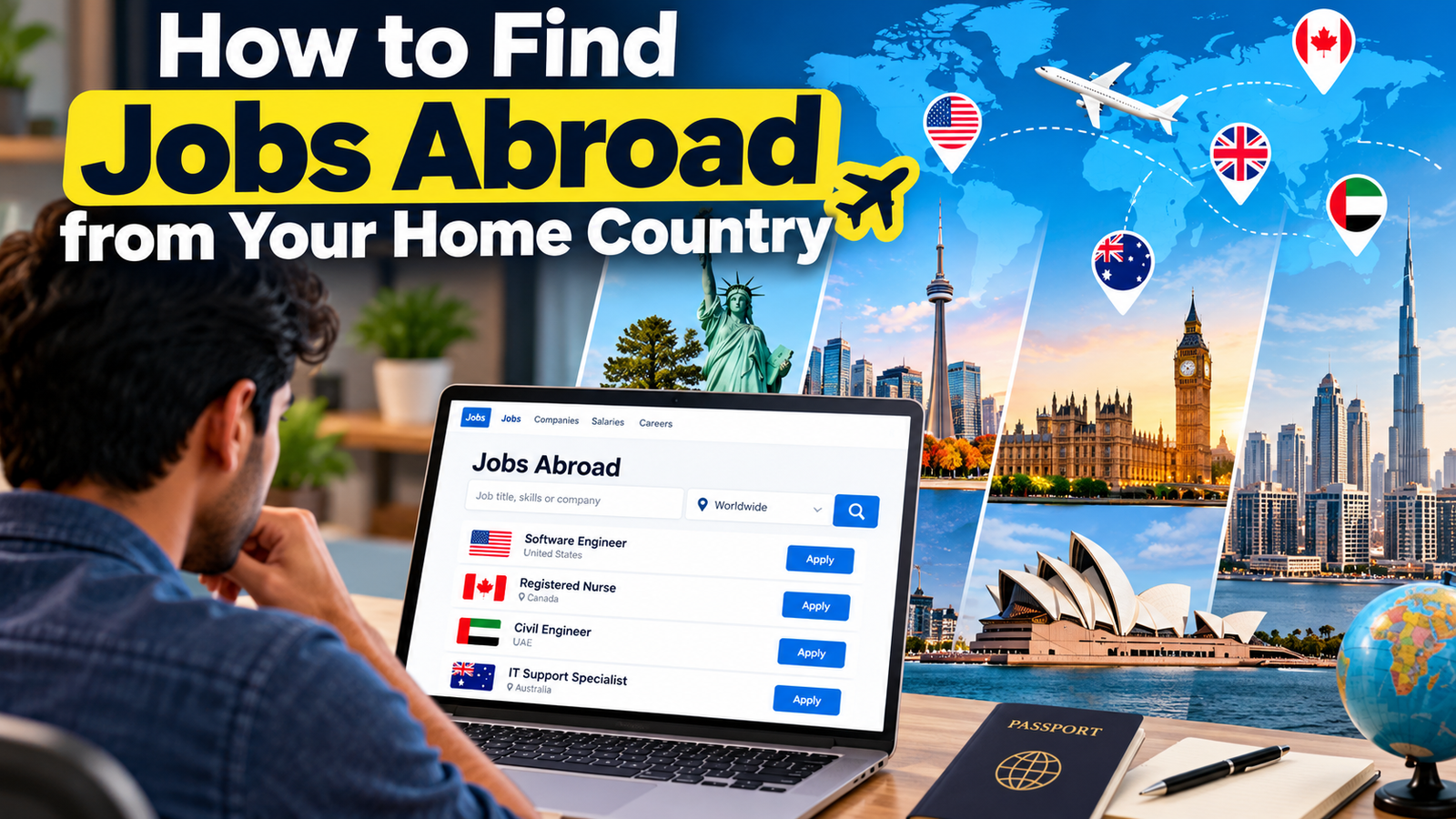
Finding a job in another country can open the door to new career opportunities, international work experience and professional growth. Many people dream of working abroad, but they are unsure where to begin. The process can seem complicated when you are applying from your home country, especially if you do not know which websites to use, how to contact foreign employers or what documents you need.
The good news is that you can start searching for international jobs online without travelling overseas. With the right preparation, a professional resume and a clear understanding of work visa requirements, you can explore opportunities and apply directly to suitable employers.
In this guide, you will learn how to find jobs abroad from your home country, where to search for vacancies, how to improve your applications and how to avoid common overseas recruitment scams.
1. Choose the Right Country for Your Career
Before applying for international jobs, decide which countries match your qualifications, work experience and career goals.
Different countries have different hiring requirements, salary structures, languages and immigration rules. A job that is suitable for one applicant may not be suitable for another.
Start by researching three important factors:
- Job opportunities: Identify countries where employers recruit people with your skills and experience.
- Language requirements: Check whether English is sufficient or whether you need to learn another language.
- Work visa eligibility: Understand the visa or work permit required for your occupation and nationality.
For example, software developers may explore technology positions in several international markets, while healthcare professionals may need professional registration or licensing before they can work abroad. Hospitality, construction, logistics and manufacturing workers should also check occupation-specific requirements.
Do not choose a country based only on social media claims about high salaries. Research living costs, taxes, accommodation, employment conditions and the legal requirements for working there.
2. Use Trusted International Job Websites
Online job portals are among the most convenient ways to discover overseas vacancies while remaining in your home country. They allow you to search by country, job title, experience level and employer.
Here are five platforms worth exploring.
LinkedIn Jobs
LinkedIn Jobs allows job seekers to search for international vacancies and explore employers and professional contacts.
Visit: https://www.linkedin.com/jobs/
Create a complete profile with your qualifications, work experience, skills and career interests. Search using terms such as “visa sponsorship,” “international recruitment” or “relocation assistance,” where relevant.
However, these search terms do not guarantee that an employer will sponsor your visa. Read the full job description and confirm the employer’s policy before applying.
Indeed
Indeed provides job listings across different markets, although availability and search features vary by country.
Visit: https://www.indeed.com/
Use the location filter to explore jobs in your target country. Search for specific roles instead of relying only on broad phrases such as “jobs abroad.”
For example, a candidate with accounting experience could search for “accountant jobs in Australia” or “accounting jobs with visa sponsorship,” then verify the requirements of each vacancy.
EURES
EURES is an official European employment network that provides information about job opportunities and living and working conditions in European countries.
Visit: https://eures.europa.eu/
It can be useful for exploring European vacancies and learning about different employment markets. However, eligibility to work in a particular European country depends on your citizenship, residence status and applicable immigration rules.
Glassdoor
Glassdoor can help job seekers research employers, workplace reviews, salaries and available vacancies.
Visit: https://www.glassdoor.com/
Use employer information to prepare for interviews and understand the workplace. Treat salary figures and anonymous reviews as estimates rather than guaranteed outcomes.
Company Career Websites
Applying directly through an employer’s official careers page is another valuable approach.
First, identify reputable companies in your chosen industry. Visit their official websites, open the careers section and search for positions that match your background.
Direct applications can help you confirm that a vacancy is genuinely associated with the company. Nevertheless, verify the website address carefully because fraudulent websites can imitate legitimate employers.
3. Prepare a Professional International Resume
Your resume is often one of the first things an employer reviews. A clear, relevant resume can help recruiters understand your experience and decide whether you match a vacancy.
Before applying, tailor your resume to the position rather than sending exactly the same document to every employer.
Include these sections:
- Contact details and professional email address
- Short professional summary
- Relevant employment history
- Education and qualifications
- Technical and professional skills
- Language abilities and certifications, where relevant
Focus on achievements and responsibilities that relate directly to the advertised role.
For example, instead of writing “Worked in customer service,” you could explain the type of customers you supported, the systems you used or measurable improvements you contributed to, provided those details are accurate.
Use simple formatting, readable headings and clear language. Follow the employer’s instructions about file formats and any additional documents.
Some countries or employers have specific resume conventions. Research the local expectations before submitting an application. Do not include sensitive personal information unless it is genuinely required and appropriate.
4. Search for Jobs That Offer Visa Sponsorship
One of the biggest challenges for overseas applicants is finding an employer willing and legally able to hire someone who needs immigration permission.
Visa sponsorship requirements vary by country, occupation and visa category. Some employers recruit internationally, while others require applicants to already have authorization to work locally.
Use targeted searches such as:
- Jobs with visa sponsorship
- International applicants welcome
- Employer-sponsored work visa
- Overseas recruitment for skilled workers
- Relocation assistance available
Read each vacancy carefully. A company mentioning international recruitment does not necessarily mean every position offers sponsorship.
Before accepting an offer, confirm which party is responsible for the visa process, what costs are involved, whether the job qualifies under the relevant immigration rules and whether your qualifications meet the requirements.
Always check the official immigration website of the destination country for current rules. Do not rely solely on an employer, recruitment agent or online discussion for legal immigration advice.
5. Apply Directly to Foreign Employers
Once you find a suitable vacancy, submit a targeted application that explains why you are a good fit.
Read the job description and identify the essential qualifications, experience and skills. Then adjust your resume and cover letter to address those requirements honestly.
A short cover letter should explain:
- Which position you are applying for.
- How your experience relates to the role.
- What relevant skills or achievements you bring.
- Your willingness and eligibility to relocate, where applicable.
For example, a software developer could highlight relevant programming languages, completed projects and professional experience. A hospitality applicant might emphasize customer service, communication skills and experience working in a busy environment.
Keep a record of the company name, job title, application date, contact details and follow-up dates. A spreadsheet can help you organize applications and avoid applying repeatedly for the same position.
Do not send money simply because someone promises to arrange an interview or guarantee a job. Verify the employer and recruitment process before sharing sensitive documents or making payments.
6. Build Professional Connections Online
Networking can help you learn about vacancies that may not be easy to find through ordinary job searches.
LinkedIn is a useful place to connect with recruiters, professionals in your industry and employees at companies you want to join.
Start by improving your profile and following employers in your target country. Participate professionally in relevant discussions and contact recruiters with a short, personalized message.
For example, you could introduce yourself, mention your occupation and experience, and ask whether the company considers applicants who require work authorization.
You can also attend legitimate virtual career fairs, industry webinars and online professional events.
Networking does not guarantee employment, but it can help you understand local hiring practices, identify relevant opportunities and prepare for interviews.
7. Prepare for Online Interviews
Many international employers conduct initial interviews through video calls or telephone conversations. Preparing in advance can help you communicate your skills more confidently.
Research the company, review the job description and prepare examples of your previous work.
Practise answering common questions, including:
- Tell me about yourself.
- Why do you want to work for this company?
- What experience makes you suitable for this role?
- Why are you interested in relocating?
- What work authorization or visa arrangements do you need?
Test your internet connection, microphone and camera before the interview. Choose a quiet location and check the time difference between your country and the employer’s location.
Ask relevant questions about the responsibilities, salary, benefits, working hours, relocation support and employment contract.
A legitimate employer should be able to explain the hiring process clearly. Be cautious if an interviewer avoids basic questions about the company or offers a job without a reasonable assessment of your suitability.
8. Verify the Job Offer and Work Visa Requirements
Receiving an offer letter is an important milestone, but it is not the end of the process.
Before resigning from your current job, paying recruitment fees or making travel arrangements, verify the offer independently.
Check the employer’s official contact information, confirm the vacancy directly with the company and review the employment contract.
The contract should clearly explain the job title, salary, working hours, location, benefits and other relevant conditions. Confirm that the promised job matches the position you applied for.
Next, consult the official immigration authority of the destination country. Determine which work visa is appropriate, what documents are required and whether the employer must complete any sponsorship or approval process.
If you are applying from India: The Ministry of External Affairs provides guidance on overseas employment and registered recruiting agents through its official resources. Check the eMigrate portal at https://emigrate.gov.in/ and review the relevant requirements for your situation.
The Ministry also advises job seekers to verify recruitment agents and the authenticity of overseas job offers. For assistance, consult the official Ministry of External Affairs website at https://www.mea.gov.in/overseas-employment.htm.
Never assume that a tourist visa permits you to take up employment. Follow the destination country’s legal work authorization process before starting work.
9. Avoid Overseas Job Scams
Fake international job offers can cause serious financial and personal problems. Fraudsters may advertise unusually high salaries, promise guaranteed visas or pressure applicants to pay immediately.
Watch out for these warning signs:
- Guaranteed jobs or visas without a proper selection process
- Requests for large advance payments to secure employment
- Recruiters who refuse to provide verifiable company details
- Fake offer letters or email addresses imitating real employers
- Pressure to send your passport or financial information through unverified channels
- Instructions to travel on a tourist visa for unauthorized employment
A professional-looking website or social media account is not proof that a recruiter is legitimate.
Verify recruitment agents through the relevant official government system, contact the employer independently and read the employment contract carefully. Do not surrender original documents or pay unverified fees.
If you suspect fraud, stop communicating through the suspicious channel and contact the appropriate government authority or law enforcement agency in your country.
10. Create a Simple Weekly Job Search Plan
Searching for work abroad requires consistency. Instead of applying randomly, create a weekly routine that balances research, applications and skill development.
A practical plan could look like this:
- Monday: Research employers and identify suitable vacancies.
- Tuesday: Tailor your resume and submit applications.
- Wednesday: Contact recruiters and build professional connections.
- Thursday: Practise interview questions and improve relevant skills.
- Friday: Follow up on appropriate applications and review new listings.
- Weekend: Check your progress and plan the following week.
Set realistic goals based on the quality of available vacancies rather than focusing only on the number of applications.
Track responses and identify patterns. If employers repeatedly request a qualification or skill you lack, consider whether additional training could improve your chances.
Remember that overseas recruitment may take time. Some employers have several interview rounds, document checks and immigration procedures before a candidate can begin work.
Final Thoughts
Finding jobs abroad from your home country is possible when you approach the process systematically. Start by choosing a suitable destination, researching its employment market and identifying positions that match your qualifications.
Use established job portals, company career pages and professional networks to find opportunities. Prepare a strong resume, apply carefully and practise for online interviews.
Most importantly, verify employers, recruitment agents, contracts and visa requirements before making major financial or travel decisions.
There is no guaranteed shortcut to an international career. However, careful research, consistent applications and a focus on legitimate opportunities can help you make better decisions and move closer to your goal of working abroad.
Read More : First Job Interview Tips: How to Prepare and Make a Great Impression
1 thought on “How to Find Jobs Abroad from Your Home Country: A Step-by-Step Guide”
Comments are closed.