

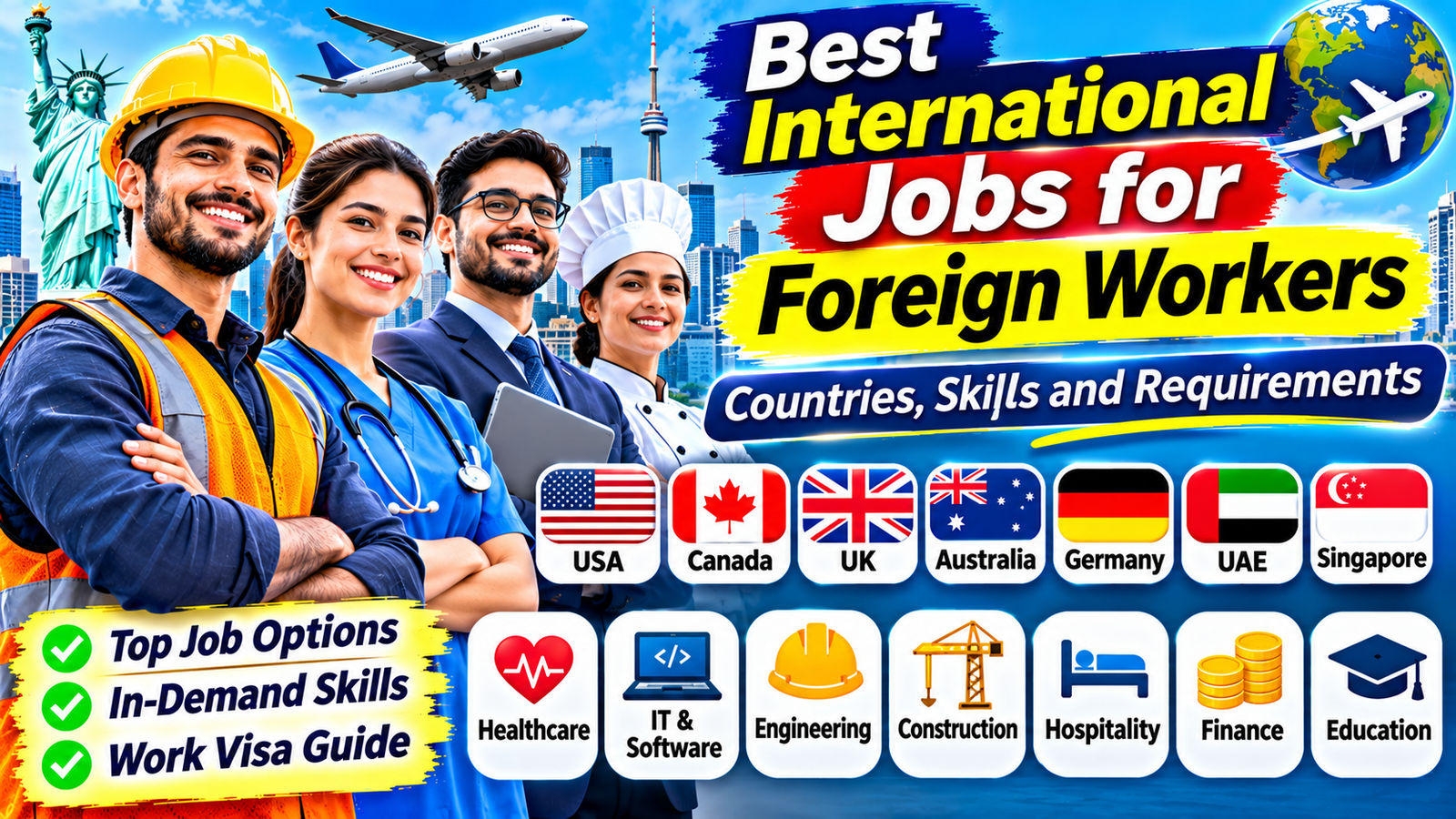
10 Best International Jobs for Foreign Workers: Countries, Skills and Requirements: Working in another country can be an important career opportunity for people who want to gain international experience, develop professional skills and explore new employment markets. Many countries recruit foreign workers across industries such as healthcare, technology, construction, engineering, hospitality, transportation and manufacturing.
However, finding an international job involves more than submitting a resume to an overseas employer. Applicants need to understand the qualifications required for their chosen occupation, the local job market, language expectations and immigration rules. Some positions require professional licences or specialised experience, while others may offer entry-level opportunities with employer-provided training.
The availability of jobs and work visa options also changes according to economic conditions, employer demand and government policies.
If you are planning to build a career abroad, here are 10 international job categories worth exploring, the countries where opportunities may be available, and the skills and requirements foreign workers should understand.
1. Healthcare Professionals
Healthcare is an important employment sector in many countries. Hospitals, clinics, nursing facilities and healthcare organisations recruit qualified professionals to provide medical services and patient support.
Common international healthcare roles include registered nurses, doctors, medical laboratory professionals, physiotherapists and certain allied health specialists.
Countries to explore: United Kingdom, Germany, Australia, Canada, New Zealand and the United States.
Skills and requirements:
- Recognised healthcare qualifications
- Relevant clinical experience
- Professional registration or licensing
- Communication skills
- Language proficiency where required
Healthcare is a regulated industry. A qualification obtained in one country does not automatically allow someone to practise in another. Foreign applicants may need credential assessment, examinations, language tests and registration with the relevant professional authority.
2. Information Technology and Software Development
Technology companies and businesses across different industries employ professionals to develop software, maintain digital systems and manage technology infrastructure.
Foreign workers with relevant technical experience may explore roles such as software developer, cloud engineer, cybersecurity analyst, data engineer, IT support specialist and systems administrator.
Countries to explore: Germany, Canada, Australia, the United Kingdom, Singapore, the Netherlands and the United States.
Skills and requirements:
- Programming languages such as Python, Java or JavaScript
- Cloud computing and database knowledge
- Cybersecurity fundamentals
- Software development experience
- Problem-solving and communication skills
A relevant degree can help with some positions, but employers may also consider professional experience, technical certifications and project portfolios. Visa eligibility depends on the country, occupation and applicable immigration pathway.
3. Engineering Jobs
Engineering professionals work in industries such as construction, manufacturing, energy, transportation, infrastructure and technology.
International opportunities may include civil engineers, mechanical engineers, electrical engineers, industrial engineers and engineering project professionals.
Countries to explore: Australia, Germany, Canada, Saudi Arabia, the United Arab Emirates and the United Kingdom.
Skills and requirements:
- Relevant engineering degree or qualification
- Technical drawing and design knowledge
- Industry-specific software skills
- Project management and teamwork
- Professional registration where applicable
Some engineering roles require recognition of overseas qualifications or registration with a local engineering body. Applicants should check these requirements before applying.
4. Construction and Skilled Trades
Construction projects depend on trained workers who can build, install, maintain and repair infrastructure and buildings.
Common occupations include electricians, plumbers, welders, carpenters, HVAC technicians, construction supervisors and heavy equipment operators.
Countries to explore: Australia, Canada, Germany, the United Arab Emirates, Saudi Arabia and New Zealand.
Skills and requirements:
- Practical trade experience
- Technical or vocational training
- Knowledge of workplace safety
- Ability to read technical plans where required
- Local licences or certifications for regulated occupations
Some employers recruit experienced tradespeople from overseas, while other positions require local certification. Foreign workers should also understand working conditions, accommodation arrangements and contract terms before accepting a job.
5. Hospitality and Tourism Jobs
Hotels, restaurants, resorts and tourism businesses employ international workers in several customer-facing and operational roles.
Potential opportunities include hotel supervisors, chefs, cooks, restaurant staff, housekeeping professionals, front-desk associates and tourism operations staff.
Countries to explore: United Arab Emirates, Qatar, Saudi Arabia, Singapore, Australia and New Zealand.
Skills and requirements:
- Customer service experience
- Communication and teamwork
- Food preparation or hotel operations knowledge
- Foreign language skills where useful
- Relevant hospitality training for specialised roles
Entry requirements vary significantly. Some employers recruit for positions that provide on-the-job training, while management and specialised culinary roles may require previous experience or formal qualifications.
Applicants should carefully review salary, working hours, accommodation, service charges and other employment conditions.
6. Manufacturing and Industrial Jobs
Manufacturing companies employ workers to operate equipment, assemble products, inspect quality and maintain production systems.
Foreign workers may explore roles such as machine operators, CNC technicians, production supervisors, industrial maintenance mechanics and quality control technicians.
Countries to explore: Germany, Japan, South Korea, Singapore, Poland and the United Arab Emirates.
Skills and requirements:
- Technical or vocational training
- Experience with industrial equipment
- Knowledge of quality control
- Workplace safety awareness
- Ability to follow production procedures
Some positions require specialised technical knowledge, while others may provide employer training. In countries where manufacturing workplaces operate primarily in a local language, language ability can be an important employment requirement.
7. Transportation and Logistics Jobs
International trade and e-commerce rely on transportation and logistics professionals to move goods, manage warehouses and coordinate supply chains.
Possible occupations include commercial drivers, warehouse supervisors, logistics coordinators, supply chain analysts and freight operations professionals.
Countries to explore: Canada, Australia, Germany, the United Arab Emirates, Singapore and the United Kingdom.
Skills and requirements:
- Logistics and inventory management
- Route planning and coordination
- Knowledge of warehouse systems
- Commercial driving qualifications for driving roles
- Communication and organisational skills
Commercial driving is a regulated occupation in many countries. Foreign driving licences may not automatically qualify applicants to operate commercial vehicles. Local licensing, medical checks and additional training may be necessary.
8. Education and Teaching Jobs
Schools, colleges, language institutions and training organisations recruit educators and academic professionals.
International opportunities may include schoolteachers, university lecturers, English-language instructors, vocational trainers and education support professionals.
Countries to explore: United Arab Emirates, Saudi Arabia, Qatar, Singapore, Japan and selected European countries.
Skills and requirements:
- Relevant academic qualification
- Teaching experience where required
- Teaching certification or professional registration
- Subject knowledge
- Language proficiency
Requirements vary according to the institution and education level. Some international schools prefer teachers with recognised teaching qualifications and classroom experience. University positions may require postgraduate degrees or research experience.
9. Finance and Accounting Jobs
Businesses need financial professionals to manage accounts, analyse financial information, prepare reports and support business decisions.
Foreign workers may explore positions such as accountants, financial analysts, auditors, payroll specialists and finance operations professionals.
Countries to explore: Singapore, the United Kingdom, Canada, Australia, the United Arab Emirates and Germany.
Skills and requirements:
- Accounting and financial knowledge
- Spreadsheet and reporting skills
- Understanding of financial regulations
- Analytical thinking
- Professional qualifications where required
International accounting certifications may help candidates demonstrate their knowledge, but recognition and licensing requirements vary between countries. Applicants should check whether local professional registration is necessary for their preferred position.
10. Renewable Energy and Environmental Careers
The renewable energy sector includes careers related to solar power, wind energy, energy storage, environmental management and sustainable infrastructure.
Possible roles include solar installation technicians, wind turbine technicians, renewable energy engineers, environmental specialists and energy project coordinators.
Countries to explore: Germany, Denmark, Australia, Canada, the United Kingdom and the Netherlands.
Skills and requirements:
- Electrical or mechanical knowledge for technical positions
- Renewable energy systems knowledge
- Environmental science or engineering qualifications
- Workplace safety training
- Project coordination and analytical skills
Some technical roles require specialised certification and practical experience. Candidates should research the qualifications accepted by employers and relevant local authorities.
How to Find International Jobs as a Foreign Worker
Finding a genuine overseas job requires preparation and careful research. The following steps can help applicants organise their search.
1. Choose a country and occupation: Start with a career that matches your education, experience and professional interests. Research whether employers in your chosen country recruit foreign workers for that occupation.
2. Check qualification requirements: Review the job description and identify whether your degree, technical training or professional certification is recognised. Regulated professions may require additional assessments or licences.
3. Prepare an international resume: Create a clear resume highlighting your experience, qualifications, skills and achievements. Adjust the format to suit the expectations of employers in the target country.
4. Search through reliable sources: Use legitimate company career pages, recognised recruitment platforms and official employment services. Check the employer’s identity and verify that the vacancy is genuine.
5. Understand work visa requirements: Confirm which immigration category applies to your situation. Some routes require employer sponsorship, a job offer, a recognised qualification or a minimum level of experience.
Important Work Visa Requirements for Foreign Workers
A job offer does not automatically give someone permission to work in another country. Foreign applicants generally need the appropriate work visa, residence permit or employment authorisation before starting employment.
Depending on the destination, requirements may include:
- A valid passport
- A genuine job offer or employment contract
- Employer sponsorship where applicable
- Educational and professional documents
- Relevant work experience
- Language test results where required
- Health examinations or police clearance
- Professional registration for regulated occupations
Visa rules differ between countries and can change. Applicants should check the official immigration website of the destination country before paying fees, resigning from an existing job or making travel arrangements.
Be cautious of recruiters who promise guaranteed visas or jobs in exchange for large upfront payments.
Final Thoughts
International employment can offer valuable opportunities for people who have the right qualifications, practical experience and professional skills. Healthcare, technology, engineering, construction, hospitality, manufacturing, logistics, education, finance and renewable energy are some of the sectors foreign workers can explore.
However, the best destination depends on your occupation, language ability, qualifications, experience and eligibility for a suitable work visa. A country with many job openings may not necessarily be the easiest place to obtain employment authorisation.
Before applying, research genuine employers, check professional recognition requirements and understand the immigration process. A well-prepared resume, relevant skills and careful planning can help you approach international job opportunities with greater confidence.
Read Also: 10 Best Career Options After Graduation: A Complete Guide for Freshers