

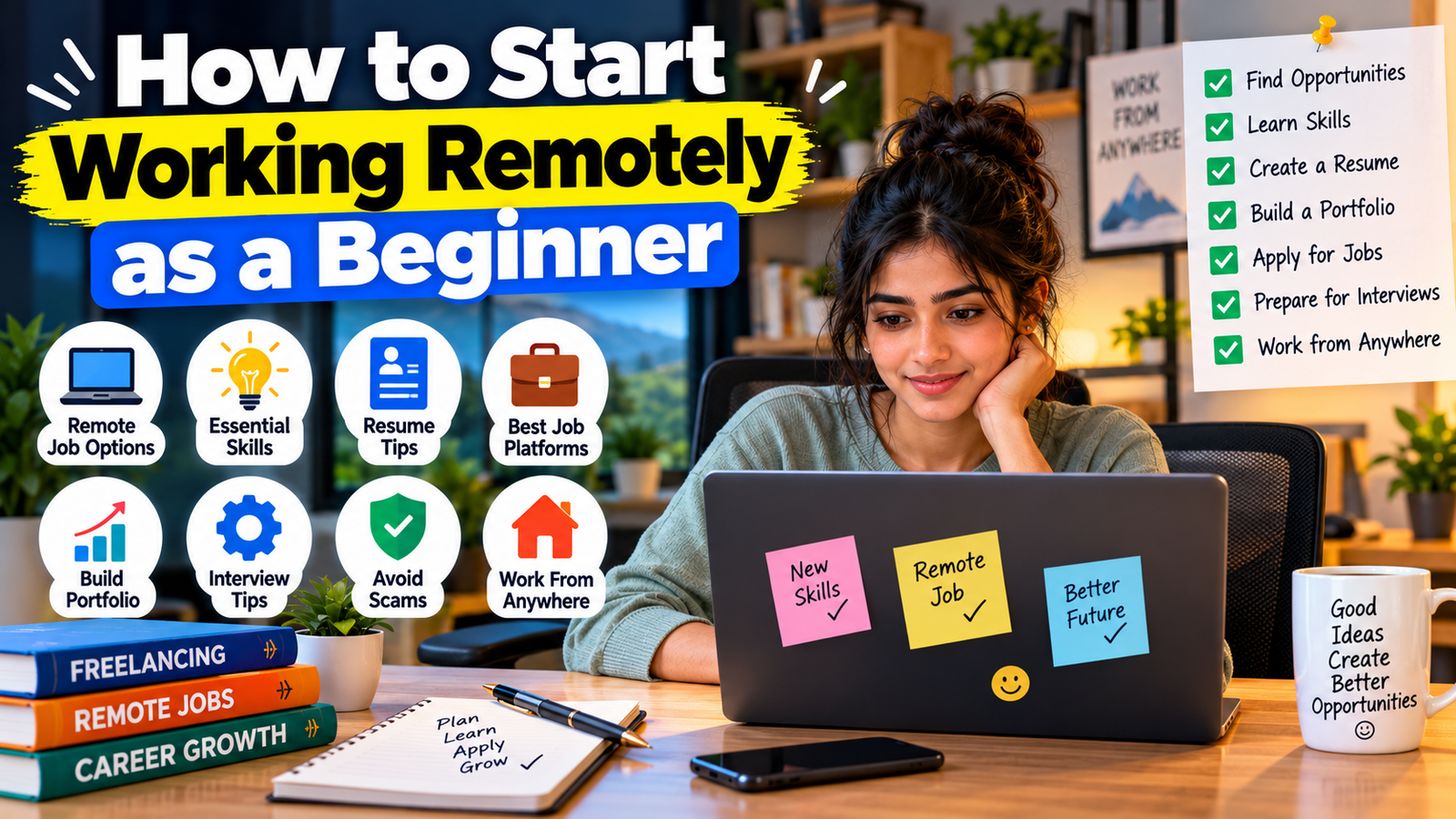
Remote work has changed the way people build their careers. Today, many companies allow employees to work from home or other locations instead of travelling to a traditional office every day. This has created new opportunities for students, fresh graduates, experienced professionals, and people looking for flexible working arrangements.
However, getting started can feel confusing if you have never worked remotely before. You may wonder which skills you need, where to find genuine remote jobs, how to prepare a resume, and whether you need previous work experience.
The good news is that you do not always need years of experience to begin. With the right skills, a reliable internet connection, basic equipment, and a well-planned job search, you can start exploring remote career opportunities.
This guide explains how to start working remotely as a beginner, where to find opportunities, and how to avoid common mistakes.
1. Understand What Remote Work Means
Remote work is a working arrangement that allows employees or independent professionals to complete their tasks without regularly visiting a physical office.
Depending on the company and job role, remote workers may work from home, a co-working space, or another suitable location.
There are three common types of remote work:
- Fully remote: You work from a location of your choice without regularly attending an office.
- Hybrid work: You divide your working time between home and an office.
- Freelance remote work: You provide services to clients independently and may work with multiple businesses.
Some remote jobs require fixed working hours, while others allow flexible schedules based on deadlines and responsibilities.
Before applying, check whether a position is fully remote, hybrid, or location-restricted.
2. Choose a Remote Job That Matches Your Skills
One of the most important steps is choosing a job that matches your interests and abilities. You do not need to apply for every remote opportunity you find.
Beginners can explore several types of remote work.
Content Writing
Content writers create blog posts, website articles, product descriptions, guides, and other written materials.
This field may suit people who enjoy writing and researching information. Good grammar, clear communication, and the ability to explain topics are important.
Virtual Assistant
Virtual assistants help businesses with everyday administrative tasks. Their responsibilities may include managing emails, scheduling appointments, organising documents, and updating spreadsheets.
Basic computer knowledge, organisation, and communication skills can help you get started.
Customer Support
Remote customer support professionals assist customers through email, chat, or telephone.
Many companies provide training for their support processes. However, communication skills, patience, problem-solving, and basic computer knowledge are usually important.
Graphic Design
Graphic designers create visual content such as social media posts, advertisements, presentations, and marketing materials.
Beginners can practise using tools such as Canva and gradually learn more advanced design software.
Social Media Management
Social media managers help businesses maintain their online presence. Tasks may include preparing posts, writing captions, scheduling content, and reviewing engagement.
Understanding different social media platforms and creating consistent content can be useful starting points.
Data Entry
Data entry work involves entering, organising, and updating information in digital systems or spreadsheets.
Although some positions require only basic computer skills, applicants should be careful because fake data entry job advertisements are common.
3. Learn the Essential Skills for Remote Work
You do not need to master everything before applying. Start by developing the skills required for your selected job.
Some important skills include:
Communication: Remote workers often communicate through email, messaging applications, and video meetings. You should be able to explain your work clearly and ask questions when necessary.
Time management: Working independently requires planning your daily activities, completing assignments, and meeting deadlines.
Basic computer skills: Learn how to use documents, spreadsheets, email, file management, and video conferencing applications.
Problem-solving: Remote employees may need to solve small problems independently before requesting assistance.
Digital collaboration: Become familiar with tools such as Google Workspace, Microsoft Teams, Slack, and Zoom. The tools required will depend on the employer.
You can improve these skills through free learning resources, practice projects, and beginner-friendly online courses.
4. Prepare Your Computer and Internet Connection
A suitable working setup makes remote work easier and more productive.
You do not necessarily need an expensive computer to begin. The equipment depends on the job you choose.
Here are some basic requirements:
- A laptop or desktop computer suitable for your tasks.
- A stable internet connection.
- A comfortable place to work.
- Headphones or a headset for online meetings.
- A webcam and microphone when required.
- A professional email address.
Some jobs, particularly customer support and technical roles, may require specific operating systems, software, or minimum hardware specifications.
Always check the employer’s requirements before purchasing equipment.
If you only have a smartphone, you can learn skills and explore certain mobile-friendly tasks. However, many professional remote jobs require a laptop or desktop computer.
5. Create a Professional Resume
Your resume is one of the first things employers may review when considering your application.
If you are a beginner without professional experience, focus on your education, relevant skills, personal projects, training, and practical abilities.
A beginner-friendly resume should include:
- Full name and professional contact details.
- A short professional summary.
- Educational qualifications.
- Relevant technical and communication skills.
- Personal projects or practical work.
- Certifications or completed courses, if applicable.
- Portfolio links, if available.
Avoid adding skills you cannot demonstrate. Employers may ask questions or conduct practical tests during the selection process.
Keep your resume organised, easy to read, and relevant to the position you are applying for.
6. Build a Portfolio Before Applying
A portfolio is a collection of examples that demonstrates what you can do.
It can be particularly useful for beginners who do not have previous employment experience.
For example:
- Content writing: Prepare two or three original sample articles.
- Graphic design: Create sample posters, banners, and social media designs.
- Virtual assistance: Prepare sample spreadsheets and organised schedules.
- Web development: Build a simple website or a small practice project.
- Social media management: Create a sample content calendar and social media posts.
You can organise your work using a simple portfolio website, Google Drive folder, or another suitable platform.
Make sure your samples are original and clearly identify them as practice projects when they are not from real clients.
7. Find Remote Jobs on Trusted Platforms
Once your resume and portfolio are ready, start searching for suitable opportunities.
Several platforms list remote jobs across different industries.
LinkedIn allows job seekers to search for remote positions, follow companies, and connect with professionals.
Use its job search filters to find positions that match your skills and experience.
Official website: https://www.linkedin.com/jobs/
Indeed
Indeed provides job listings from employers and other sources. You can search using terms such as remote customer support, entry-level remote jobs, and remote content writer.
Official website: https://www.indeed.com/
Remote.co
Remote.co focuses on remote job opportunities across different professional categories.
Official website: https://remote.co/
We Work Remotely
We Work Remotely lists remote opportunities in areas such as programming, marketing, design, and customer support.
Official website: https://weworkremotely.com/
FlexJobs
FlexJobs provides a platform for finding flexible and remote job opportunities. Review its membership and pricing details before signing up.
Official website: https://www.flexjobs.com/
Upwork
Upwork is a freelance marketplace where independent professionals can connect with clients who need specific services.
It may be useful for people interested in writing, design, development, virtual assistance, and other freelance services.
Official website: https://www.upwork.com/
Important: Job availability, eligibility, and location restrictions vary between platforms and employers. Always read the complete job description before applying.
8. Use the Right Keywords When Searching
Searching with general terms such as “online jobs” may produce too many unrelated results.
Instead, use specific keywords based on your skills and experience.
Some examples include:
- Entry-level remote jobs
- Work from home customer support
- Junior content writer remote
- Remote virtual assistant
- Beginner graphic designer jobs
- Remote data entry jobs
- Graduate remote opportunities
- Remote jobs with training
You can also combine your preferred job title with words such as “remote”, “entry-level”, or “junior”.
Read the requirements carefully because not every job advertised as remote is available worldwide.
9. Prepare for Remote Job Interviews
If an employer selects your application, you may be invited to an online interview.
Remote interviews are commonly conducted through video conferencing platforms or telephone calls.
Before the interview:
- Read the job description carefully.
- Research the company using its official website.
- Prepare answers about your skills and experience.
- Test your internet connection, microphone, and camera.
- Choose a quiet place with suitable lighting.
- Keep your resume and portfolio available.
Be prepared to explain why you are interested in remote work and how you manage tasks independently.
If you do not know an answer, respond honestly rather than pretending to have experience you do not possess.
10. Avoid Remote Job Scams
Remote job scams can target beginners because they often promise easy income, flexible hours, and employment without experience.
Be careful when an opportunity:
- Asks you to pay money to receive a job.
- Promises unusually high earnings for very simple tasks.
- Requests sensitive banking details before a legitimate hiring process.
- Communicates only through suspicious personal accounts.
- Offers employment without a proper interview or verification.
- Asks you to deposit money, purchase gift cards, or transfer funds.
A legitimate employer should provide clear information about the company, job responsibilities, payment arrangements, and hiring process.
Before sharing personal information, verify the company’s official website, contact details, and job advertisement.
In India, you can also check relevant government cybercrime reporting resources if you suspect an online employment scam.
11. Create a Daily Remote Job Search Routine
Finding your first remote job may take time. Instead of applying randomly, follow a consistent routine.
For example:
- Spend time checking new job listings.
- Apply to positions that match your skills.
- Customise your resume for relevant opportunities.
- Update your portfolio as you complete new projects.
- Practise interview questions.
- Improve one job-related skill regularly.
Maintain a simple spreadsheet containing the company name, job title, application date, job link, and application status.
This will help you track your progress and avoid applying to the same opportunity repeatedly.
12. What Should Beginners Do First?
If you are completely new to remote work, avoid trying to learn multiple skills at the same time.
Choose one career direction and follow a simple learning plan.
Week 1: Explore different remote job categories and select one that matches your interests.
Week 2: Learn the basic tools and skills required for your selected role.
Week 3: Create a resume and prepare two or three relevant portfolio samples.
Week 4: Start applying for suitable positions, improving your applications, and practising interviews.
This is only a suggested starting plan. Your progress will depend on your available time, learning speed, and the requirements of your chosen career.
Conclusion
Starting a remote career as a beginner may seem challenging, but it becomes easier when you follow a clear plan.
First, choose a suitable job category, learn the necessary skills, prepare a professional resume, and build a small portfolio. Then use trusted job platforms to identify genuine opportunities and apply consistently.
Remember that remote work is still professional work. It requires responsibility, communication, time management, and continuous learning.
You do not need to know everything before taking the first step. Start with one skill, practise regularly, and gradually build the experience needed to grow your remote career.
Read More: How to Write a Professional Resume with No Experience: A Beginner’s Guide
1 thought on “How to Start Working Remotely as a Beginner: A Complete Guide”
Comments are closed.